Infrastructure is built with the expectation that it will perform reliably for decades. Every structure depends on materials that can withstand heavy loads, changing weather conditions, and continuous use. Choosing the right type of steel is a decision that has a lasting impact on the quality and lifespan of a project.
Among the many options available today, Cold Rolled Steel has become a preferred material for modern infrastructure. Its combination of strength, precision, and excellent surface quality makes it suitable for applications where accuracy and long-term performance are essential. As infrastructure standards continue to rise in 2026, manufacturers continue to support this demand through advanced steel processing capabilities, supplying high-quality cold rolled steel products that meet the evolving needs of multiple industries.
The popularity of cold rolled steel continues to grow because it delivers practical benefits throughout the entire lifecycle of an infrastructure project. Its characteristics help improve efficiency while maintaining exceptional product quality.
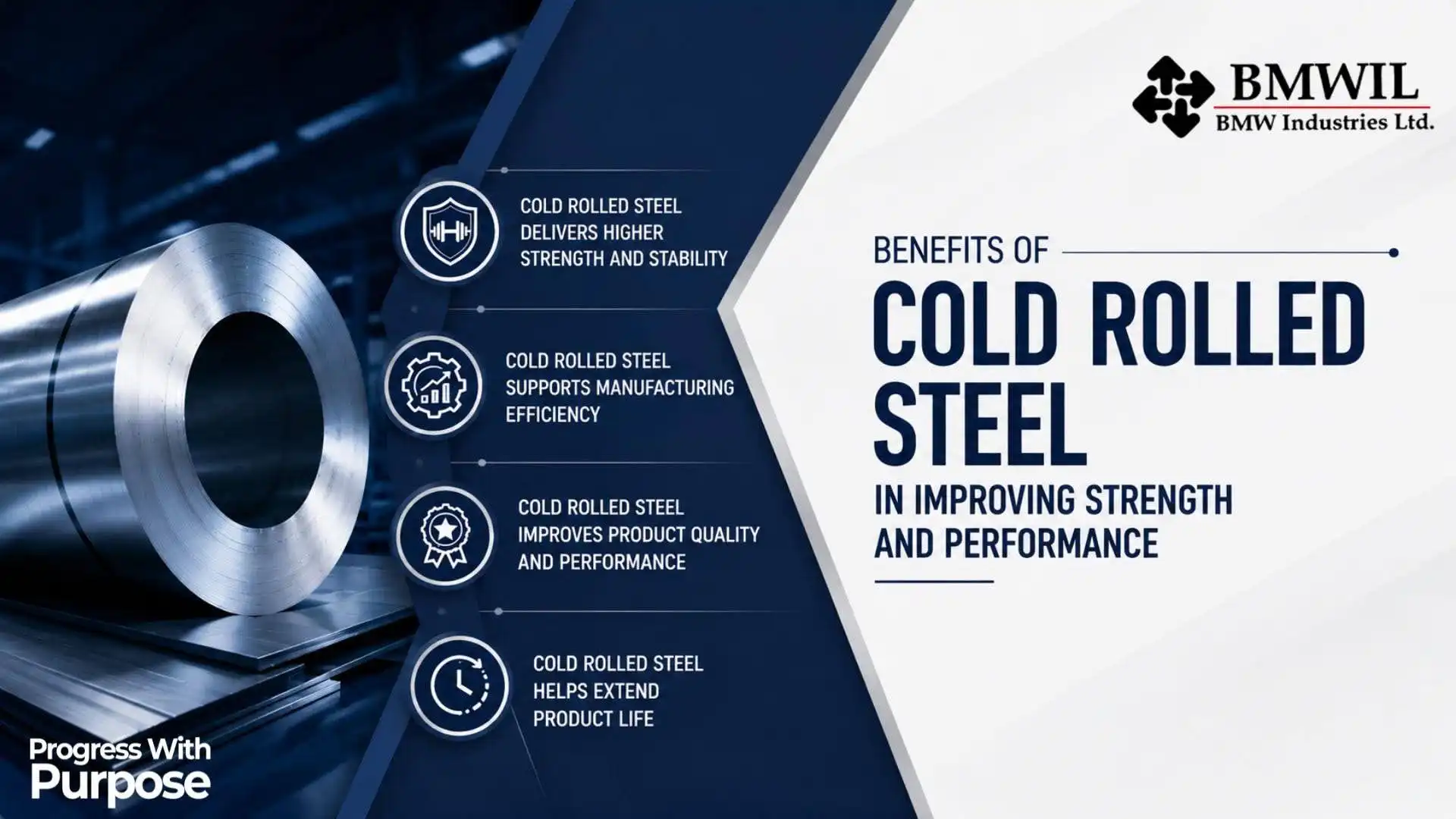
One of the biggest advantages of cold rolled steel is its superior strength and capacity. During the cold rolling process, the steel becomes stronger and more uniform, enabling it to withstand higher loads without compromising its shape or performance. This additional strength makes it an ideal choice for demanding infrastructure projects where reliability is essential. Cold rolled steel provides the structural support needed to perform consistently over many years.
Precision is just as important as strength. Accuracy plays a significant role in ensuring that steel components fit together correctly during fabrication and installation. Cold rolled steel is manufactured with tighter dimensional tolerances, consistent thickness, and better flatness, allowing every component to meet exact design specifications. Better accuracy also contributes to improved project quality, making the construction process more efficient while ensuring the finished structure performs as expected.
Not every steel product is hidden within a structure. Many infrastructure projects include visible steel elements where appearance matters alongside performance. Aesthetics & Corrosion Resistance are two important reasons why cold rolled steel is widely chosen for these applications. Its naturally smooth surface creates an excellent base for painting, coating, or finishing, resulting in a clean and professional appearance. This combination of visual appeal and long-term protection reduces maintenance requirements while extending the lifespan of the finished product.
The benefits of surface and longevity become evident throughout the lifespan of an infrastructure project. Cold rolled steel is known for its seamless finish, which not only enhances its appearance but also improves the performance of paints and protective coatings. This creates a stronger barrier against environmental conditions, contributing to excellent environmental resistance in a wide range of operating environments. For project owners, this translates into lower lifecycle costs and greater confidence in the performance of their infrastructure.
The versatility of cold rolled steel has led to its widespread use across numerous infrastructure applications of cold rolled steel. It is commonly used in commercial buildings, industrial sheds, warehouses, transport infrastructure, engineering structures, fabricated components, storage systems, electrical equipment, and manufacturing facilities. Its excellent dimensional accuracy and dependable mechanical properties make it suitable for projects where precision and consistent quality are essential.
The growing demand for high-performance construction materials has significantly expanded the use of cold rolled steel applications across modern infrastructure. Its ability to combine strength, precision, durability, and efficiency makes it a reliable choice for projects of every scale.
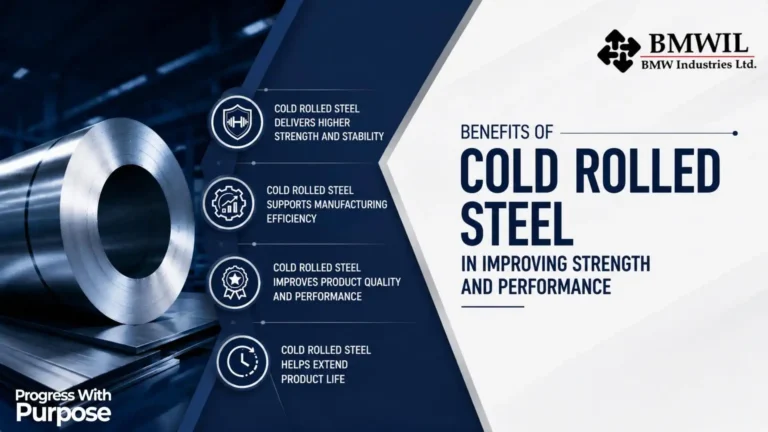
Some of the key benefits include:
The materials chosen during construction play a major role in determining how well an infrastructure project performs over time. Cold Rolled Steel continues to stand out because it combines strength, precision, durability, and efficiency in a single material. Its consistent quality allows manufacturers, engineers, and contractors to deliver projects that meet modern performance expectations without compromising reliability.
As construction practices continue to evolve, its importance will only continue to grow, helping create stronger, safer, and more sustainable infrastructure for the future.
Cold Rolled Steel offers high strength, precise dimensions, excellent surface quality, and long-term durability, making it well suited for infrastructure projects that demand consistent performance.
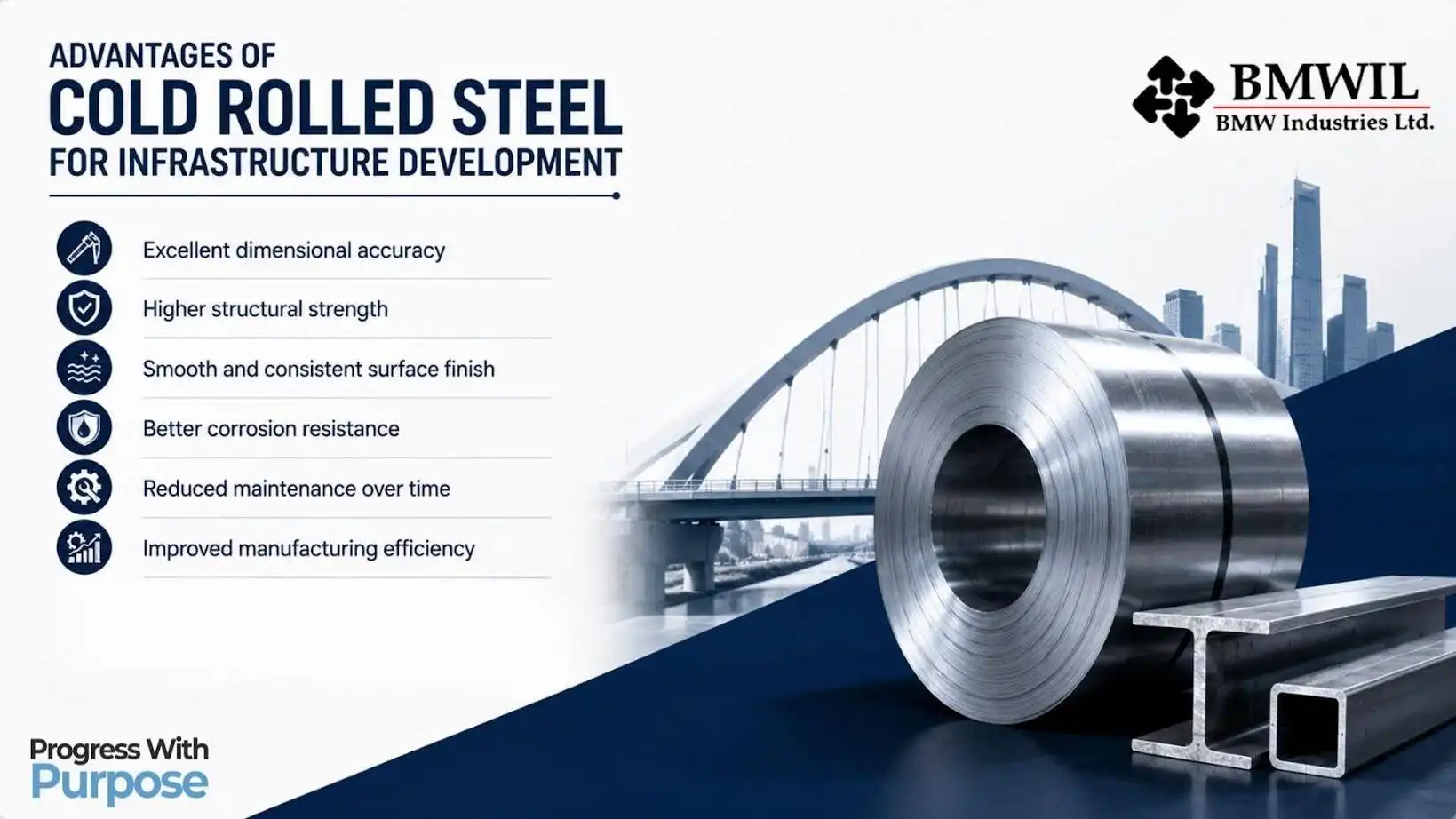
The key advantages of cold rolled steel include improved strength, greater dimensional accuracy, superior surface finish, corrosion resistance, longer service life, and better manufacturing efficiency.
Common Cold rolled steel applications include commercial buildings, industrial facilities, warehouses, transport infrastructure, engineering components, storage systems, and manufacturing equipment.
Cold rolled steel contributes to sustainability & efficiency by reducing material waste, offering a long operational life, requiring less maintenance, and being fully recyclable, making it a practical choice for modern infrastructure development.
Manufacturing standards are becoming more demanding with every passing year. Industries are not only looking...