Steel is part of everyday industrial progress. It supports infrastructure, manufacturing, engineering, transport, and countless applications. This is where strength and reliability matter. But producing dependable steel products is not only about processing metal. It is about maintaining consistency, precision, and accountability at every stage. That is why quality standards have become such an important part of the steel processing industry.
Today, quality goes beyond meeting technical specifications. Businesses expect steel products that perform consistently, comply with regulations, and align with evolving sustainability goals. So, what exactly defines quality in modern steel processing, and why does it matter so much? Let’s explore.
At their core, quality standards in steel processing are measurable benchmarks used to maintain product consistency, process accuracy, safety, and operational reliability. From incoming materials to testing and sustainability practices, every step contributes to the final quality outcome.
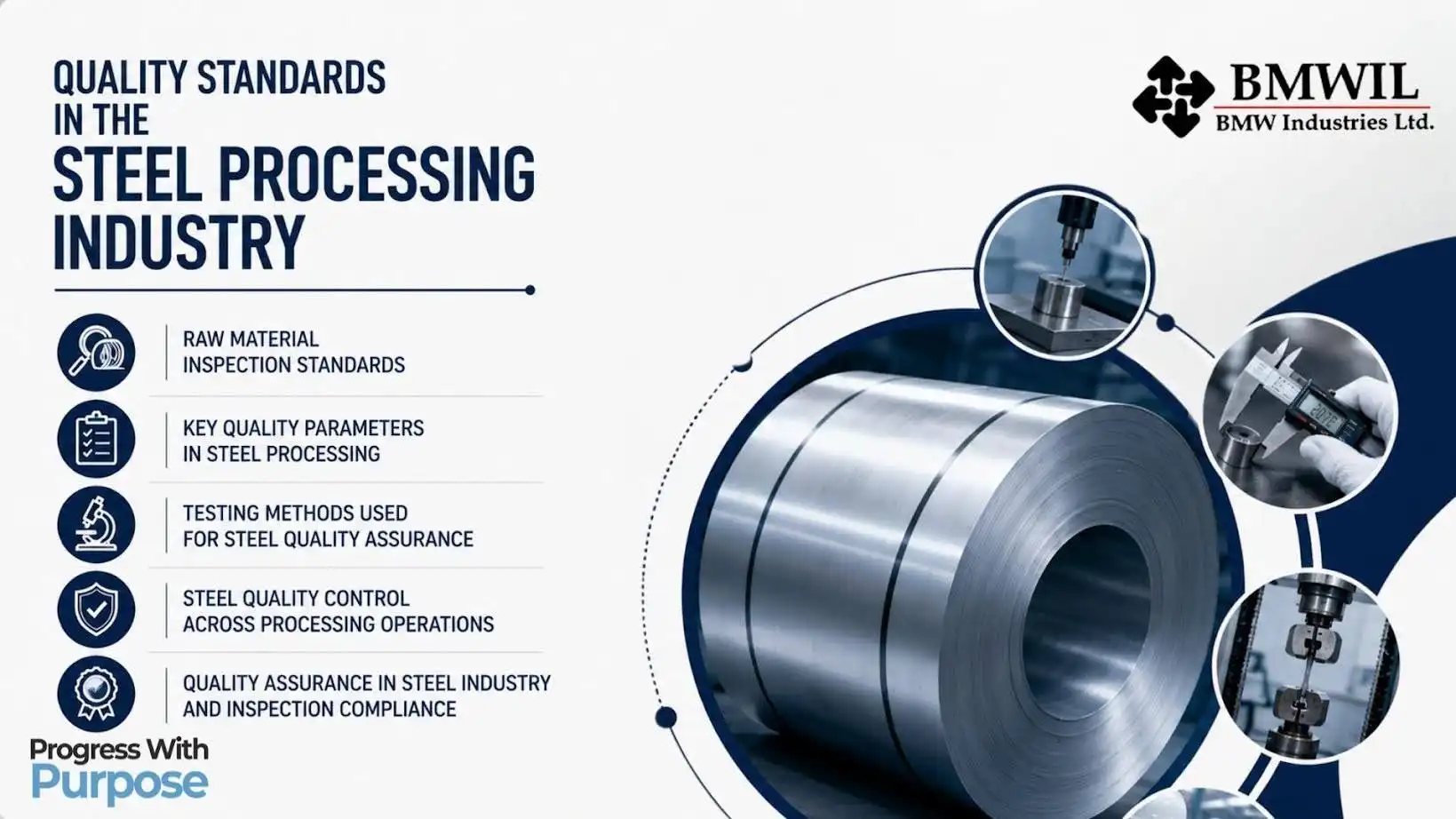
Strong quality performance begins before processing operations even start. Raw material inspection standards play an important role in ensuring that materials entering the production cycle meet defined requirements. The condition and consistency of raw materials can influence every downstream process. If material variations are overlooked at the beginning, maintaining uniform quality later becomes more difficult. This is why inspection at the entry stage matters. It helps manufacturers identify inconsistencies early, reduce operational disruptions, and maintain better process stability.
Several factors contribute to the final quality of processed steel. Key quality parameters in steel processing commonly include dimensional accuracy, surface quality, processing precision, consistency, and performance reliability. These parameters are not monitored in isolation. They required coordination across production teams, inspection systems and quality practices. Quality is strongest when it becomes part of the process rather than a final checkpoint. Maintaining critical quality parameters also helps manufacturers respond to changing industrial requirements.
No quality system is complete without effective verification processes. Testing Methods Used for Steel Quality Assurance help manufacturers confirm that products align with expected performance and quality requirements. Testing supports much more than technical validation. It strengthens accountability, supports consistency, and helps organisations identify potential issues before products move further through the supply chain. Reliable testing systems help deliver that assurance.
Effective steel quality control does not happen at one stage of production. It depends on continuous oversight throughout the operational cycle. From production planning and monitoring to inspections and compliance checks, quality control supports consistency across processing activities. This broader approach allows manufacturers to identify concerns early and maintain stronger process discipline. Strong quality control systems also improve traceability and accountability. For customers, this creates greater confidence that products have been manufactured under clearly defined and carefully monitored conditions.
Strong quality assurance in steel industry systems bring together inspections, testing, compliance practices, and operational discipline. A reliable quality assurance framework helps organisations maintain consistency while strengthening confidence in both their products and processes. This matters particularly in industries where steel performance directly influences manufacturing reliability, infrastructure durability, and operational safety. A structured approach to quality assurance helps ensure that standards are maintained from beginning to end.
Quality standards continue to shape the future of the steel processing industry. They influence how steel is inspected, processed, tested, monitored, and delivered across industries that depend on consistent performance. From raw material inspection standards and key quality parameters in steel processing to testing methods used for steel quality assurance, sustainability initiatives, and robust steel quality control, each element contributes to stronger operational outcomes. As industrial expectations continue to grow, organisations that prioritise strong quality systems will remain better equipped to deliver reliability, efficiency, and long-term value.
Quality standards help maintain consistency, improve process reliability, support compliance requirements, and strengthen customer confidence.
Common parameters include dimensional accuracy, surface quality, consistency, process precision, and performance reliability.
Through inspections, testing procedures, monitoring systems, operational discipline, and adherence to structured quality practices.
Sustainability supports efficient resource use, environmental responsibility, regulatory alignment, and long-term operational resilience.

Industrial success is no longer measured only by output, scale, or operational efficiency. Businesses today...
Every steel product begins with raw material, but its real value is created during processing....