Every steel product begins with raw material, but its real value is created during processing. The steel quality depends on how accurately it has been processed. Even the smallest variation in dimensions or finish can affect performance, durability, and safety.
This is why precision has become a defining factor in today’s steel processing industry. As manufacturing standards continue to evolve in 2026, industries expect steel products that are consistent, reliable, and manufactured to exact specifications. Precision is no longer just about accuracy but it is about delivering products that perform consistently throughout their service life.
Precision influences every stage of steel manufacturing, from processing and fabrication to installation and long-term performance. Its advantages extend far beyond production efficiency, helping manufacturers deliver products that consistently meet industry expectations.
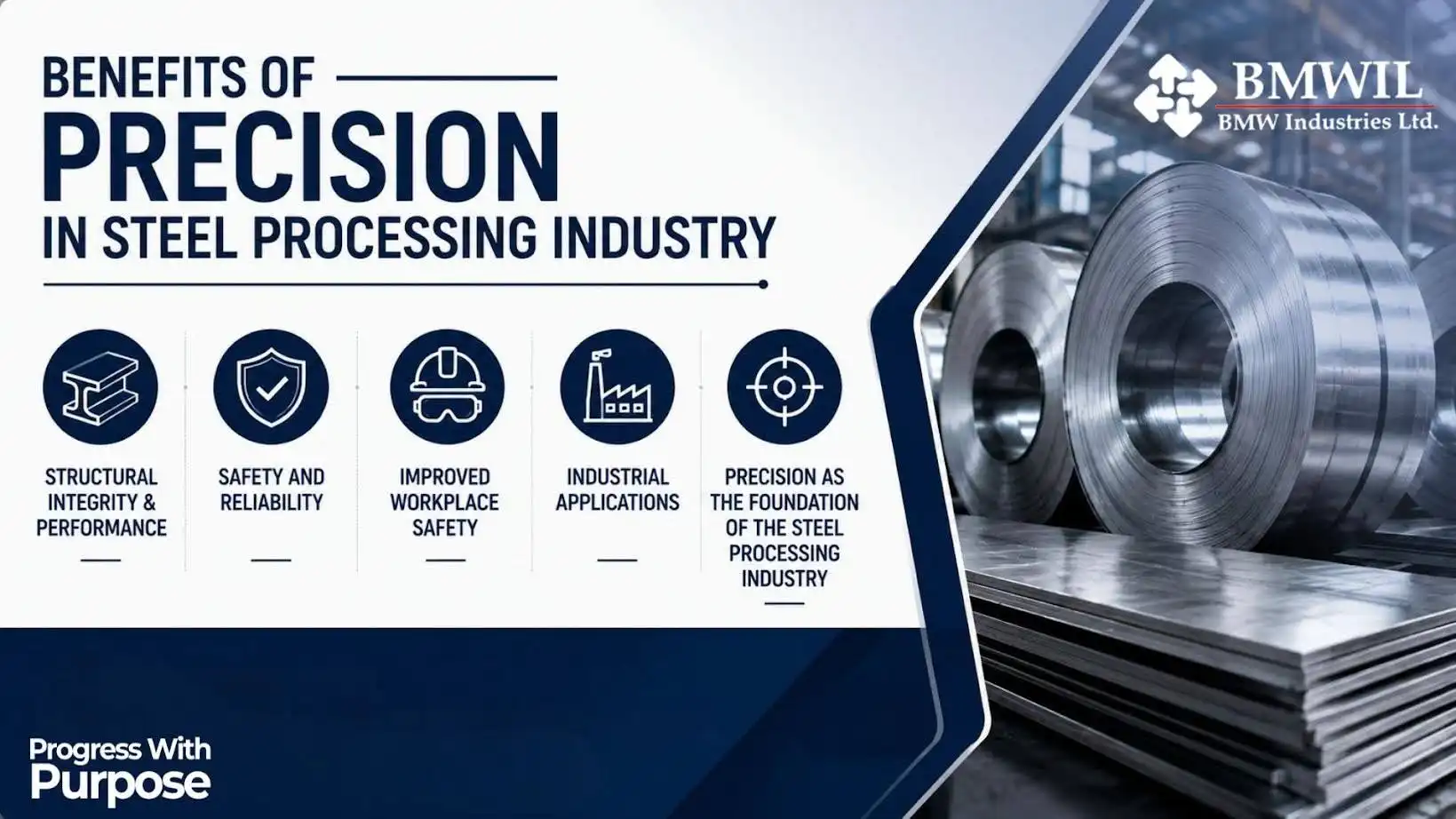
One of the greatest advantages of precision steel processing is the improvement it brings to structural integrity & performance. When steel is processed accurately, every component maintains uniform dimensions and consistent mechanical properties. This allows structures to distribute loads more effectively and perform reliably under demanding conditions. Precision helps reduce the risk of structural inconsistencies. It also improves welding accuracy and assembly, allowing engineers and fabricators to work with confidence. The result is steel that offers dependable performance and a longer operational life.
Precision has a direct impact on safety and reliability, particularly in industries where steel components are expected to perform under continuous stress. Accurate processing ensures that every product meets the required specifications before it reaches the customer. Consistent dimensions reduce the chances of poor alignment and weak joints, or unexpected failures during installation and operation. Reliable steel products also contribute to safer structures and equipment throughout their lifespan. Manufacturers can deliver steel that performs consistently in challenging environments while giving customers greater confidence in the quality of every product.
The benefits of precision are not limited to the finished product. They also contribute significantly to improved workplace safety during manufacturing and fabrication. Steel that has been processed accurately is easier to handle, cut, weld, and assemble, reducing the need for repeated adjustments or corrective work. Fewer production errors also mean fewer opportunities for workplace accidents caused by manual rework or improper fitting. This creates a safer working environment without compromising efficiency or productivity.
Precision plays an essential role across a wide range of industrial applications. Industries like construction, automotive, engineering, infrastructure, energy, railways, and manufacturing all depend on steel products that meet exact specifications. Accurate processing ensures that components fit together properly during fabrication and continue to perform reliably once installed. Precision also helps manufacturers reduce assembly time, improve production efficiency, and maintain consistent quality across large-scale projects.
The success of the modern steel processing industry depends on its ability to deliver consistent quality through accurate manufacturing processes. Customers today expect steel products that offer reliable performance, precise dimensions, and superior finish across every batch. Expertise in processing HRPO coils, CR coils, galvanised products, pipes, tubes, and TMT bars demonstrates how precision supports both operational efficiency and customer satisfaction. By placing accuracy at the centre of production, manufacturers are better equipped to meet the evolving needs of industries worldwide.
Precision has become one of the biggest strengths of modern industrial steel processing. It allows manufacturers to produce steel that is not only consistent in quality but also easier to fabricate, transport, and install.
Some of the key advantages include:
These advantages clearly show why precision remains one of the most valuable aspects of today’s steel processing industry, where every stage of production contributes to the quality of the final product.
Precision has become the foundation of the modern steel processing industry. It influences every stage of steel processing, ensuring that steel products meet the highest standards of quality, consistency, and performance. From improving structural integrity & performance to enhancing safety and reliability, accurate processing helps manufacturers deliver products that industries can depend on.
As industrial expectations continue to rise, investing in precision will remain essential for producing steel products that deliver long-term value, operational efficiency, and dependable performance.
Precision ensures steel products are manufactured with consistent dimensions, improved quality, and reliable performance, making them suitable for demanding industrial applications.
Modern steel processing technology uses automation, digital monitoring, and advanced machinery to achieve greater accuracy, reduce production errors, and maintain consistent quality.
Construction, infrastructure, automotive, engineering, manufacturing, railways, and energy sectors all benefit from precision steel processing because it improves product reliability and operational performance.
The key benefits of precision include better product quality, improved structural performance, enhanced workplace safety, reduced material waste, higher efficiency, and greater customer confidence.
Industrial success is no longer measured only by output, scale, or operational efficiency. Businesses today...
Steel is part of everyday industrial progress. It supports infrastructure, manufacturing, engineering, transport, and countless...