Manufacturing standards are becoming more demanding with every passing year. Industries are not only looking for strong materials but also for steel solutions that can deliver precision, consistency, and long-term performance. Its popularity comes from a combination of qualities that manufacturers value highly refined finish, reliable strength, dimensional accuracy, and dependable processing characteristics.
Some companies known for their expertise in steel processing, support industries that rely on high-quality processed steel products to meet modern production requirements.
So, what makes cold rolled steel stand out, and how does it help improve strength and performance? Let’s explore.
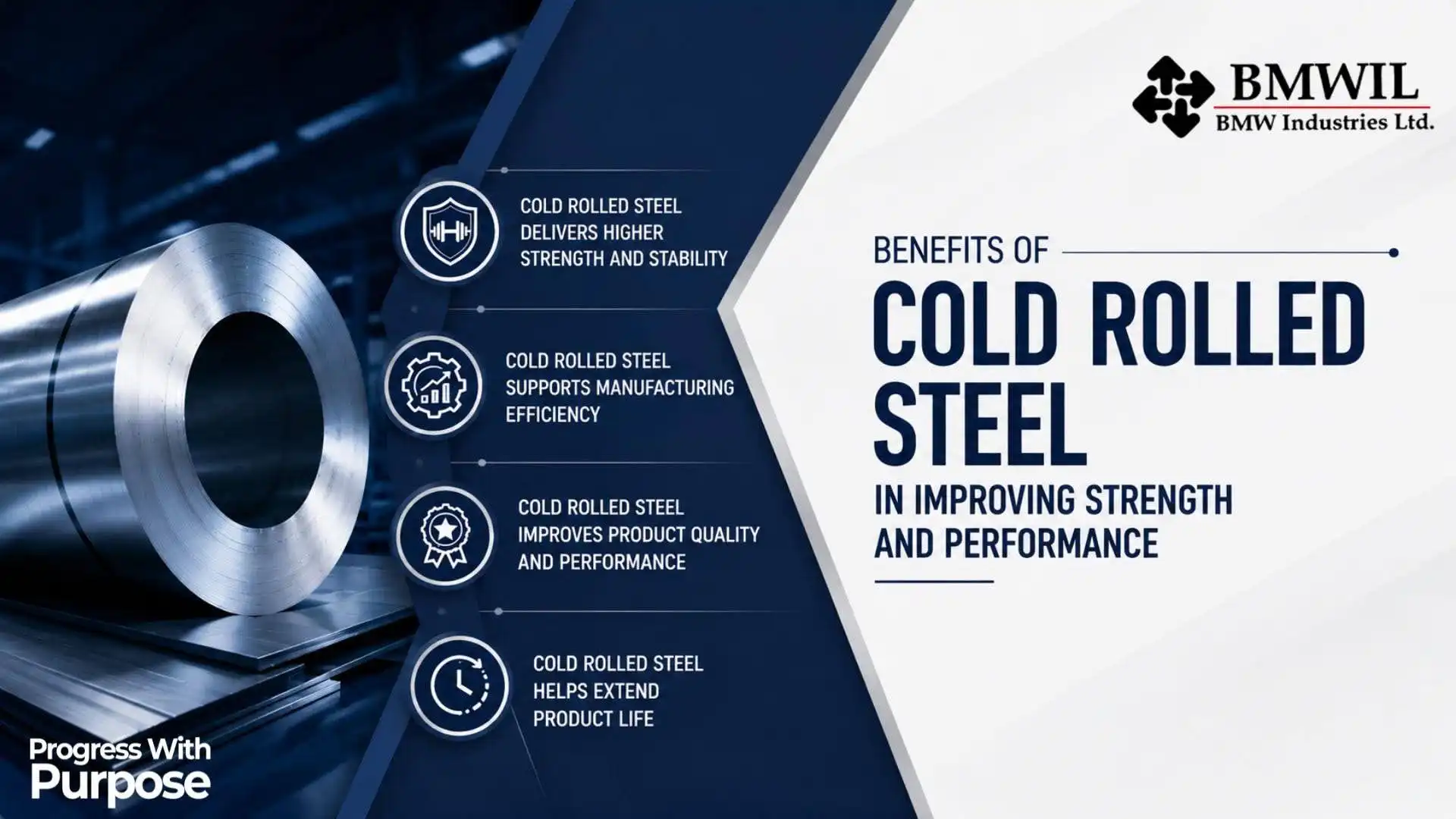
The growing demand for cold rolled steel is not driven by a single advantage. Its value comes from the way it supports strength, manufacturing accuracy, durability, and overall product performance.
The additional processing stage helps improve cold rolled steel strength, making the material more suitable for applications where consistency and durability are important. Better dimensional stability and refined structural properties also contribute to improved performance in demanding environments. This combination of strength and precision is particularly useful for industries producing components that must maintain accuracy under operational stress.
Efficiency in manufacturing often depends on material consistency. When steel offers dependable dimensions and reliable surface quality, production processes become easier to manage. This is where cold rolled steel in manufacturing delivers practical value. Because the material is known for its dimensional accuracy and uniform finish, manufacturers can often achieve smoother processing outcomes and better production precision.
Understanding how cold rolled steel enhances manufacturing efficiency becomes easier when viewed from a production perspective.
Strong product performance depends heavily on material quality, and this is another area where cold rolled steel offers clear advantages. The broader benefits of cold rolled steel include better surface characteristics, refined finish, and consistent dimensional properties. These qualities make the material suitable for products that require precision fabrication and reliable appearance standards. Reliable cold rolled steel performance is particularly important in sectors where even small inconsistencies can affect the final outcome.
Durability remains a major consideration across industrial sectors, and material performance plays a direct role in determining product longevity. Improved cold rolled steel strength, stable dimensions, and refined processing quality all contribute to better long-term performance. Products manufactured using cold rolled steel are often selected for environments where reliability and sustained functionality matter. Longer-lasting products can support better operational value, improved reliability, and reduced performance concerns over time.
The use of cold rolled steel continues to expand because the material can adapt to a variety of industrial requirements.
Industries like automotive manufacturing, appliance production, engineering fabrication, industrial equipment, and consumer goods regularly use cold rolled steel sheets and cold rolled steel coils.
These sectors depend on materials capable of supporting precision shaping, dimensional consistency, and dependable production quality.
The versatility of cold rolled steel allows it to serve both appearance-focused applications and function-driven industrial requirements. This flexibility is one of the reasons it remains an important material within modern manufacturing systems.
The increasing demand for cold rolled steel reflects a broader shift towards precision, reliability, and stronger material performance across industries.
Its combination of dimensional accuracy, refined finish, and enhanced cold rolled steel strength makes it highly valuable across manufacturing and engineering applications. From improved cold rolled steel performance to stronger outcomes in cold rolled steel in manufacturing, its advantages remain highly relevant in today’s industrial landscape.
With companies such as BMWIL supporting advanced steel processing requirements, cold rolled steel continues to be a trusted material for businesses looking to improve strength, efficiency, and long-term product performance.
The uses of cold rolled steel include automotive manufacturing, appliances, industrial equipment, engineering components, and precision fabrication applications.
Cold rolling improves hardness, dimensional consistency, and overall cold rolled steel strength, making the material suitable for demanding industrial environments.
Cold rolled steel in manufacturing is widely preferred because of its dimensional accuracy, smooth finish, and dependable processing consistency.
The major Benefits of Cold Rolled Steel include improved strength, enhanced surface quality, reliable performance, and stronger manufacturing precision.
Infrastructure is built with the expectation that it will perform reliably for decades. Every structure...