Steel is the foundation of countless industries, from construction and infrastructure to automotive and heavy engineering. Yet, the quality of a steel product is not determined solely by the raw material. What truly makes the difference is how that steel is processed before it reaches the end user.
Modern steel processing transforms raw steel into reliable and high-performance products that meet the demanding requirements of today’s industries. Every stage of processing contributes to improving strength, durability, precision, and overall product consistency.
Companies like BMW Industries Limited (BMWIL) have built their reputation by combining advanced processing capabilities with strict quality standards to supply value-added steel products for a wide range of industrial applications.
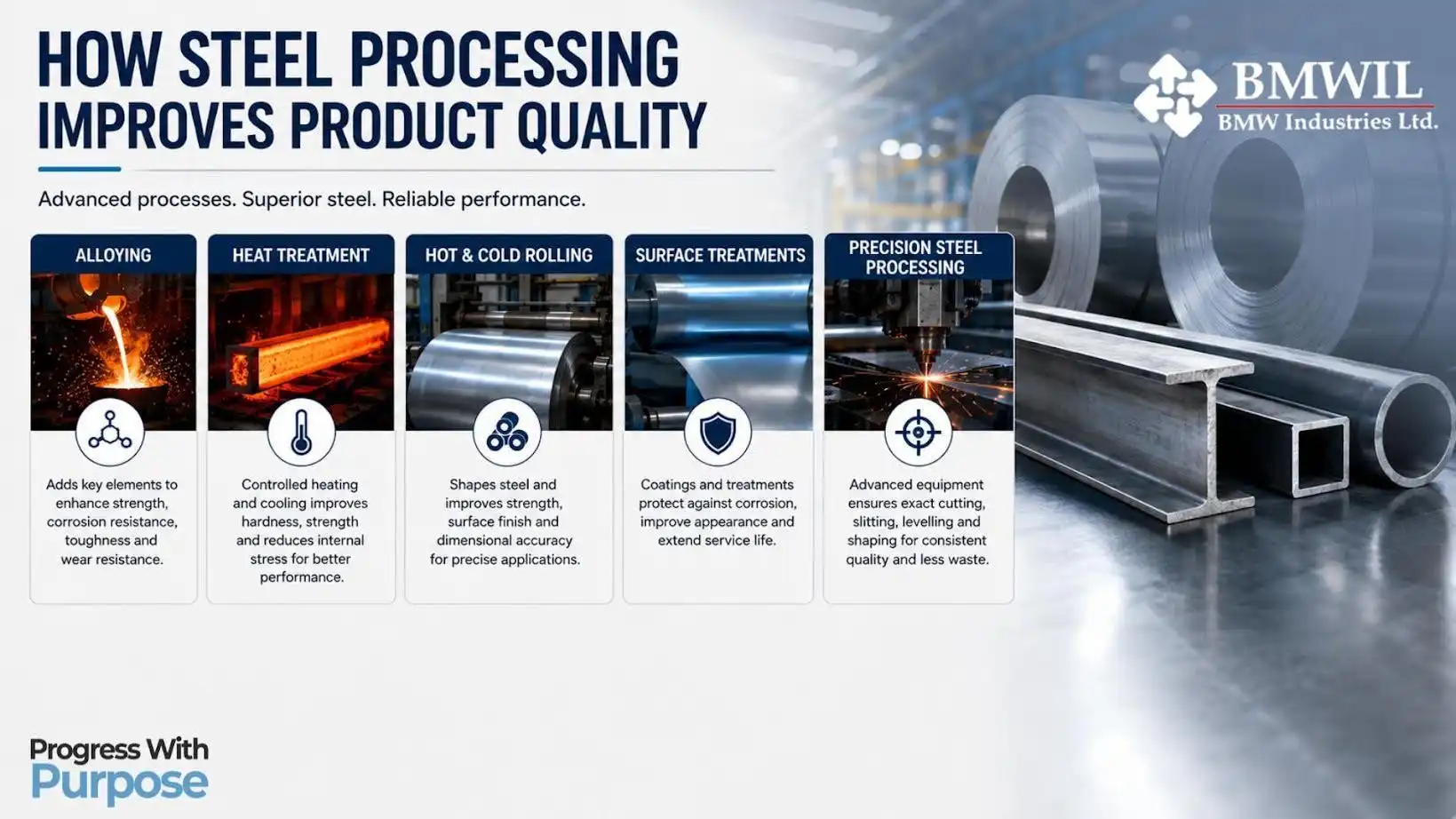
Several specialised processes work together to enhance steel’s performance. Each method contributes in a different way, helping manufacturers produce steel that is stronger, more reliable, and better suited to its intended application.
Alloying is one of the most important techniques used to improve steel performance. During this process, carefully selected elements like chromium, nickel, manganese, or molybdenum are added to the steel to enhance specific properties. Depending on the application, alloying can improve strength, corrosion resistance, toughness, and wear resistance. This flexibility allows manufacturers to produce steel that performs reliably in everything from structural construction to heavy industrial equipment.
Heat treatment improves the internal structure of steel through controlled heating and cooling processes. Techniques like annealing, tempering, normalising, and quenching are used to achieve the desired balance of hardness and strength, even the flexibility. Proper heat treatment also reduces internal stress created during manufacturing. This makes the steel more stable and easier to machine. The result is a product that performs consistently under pressure and offers a longer service life.
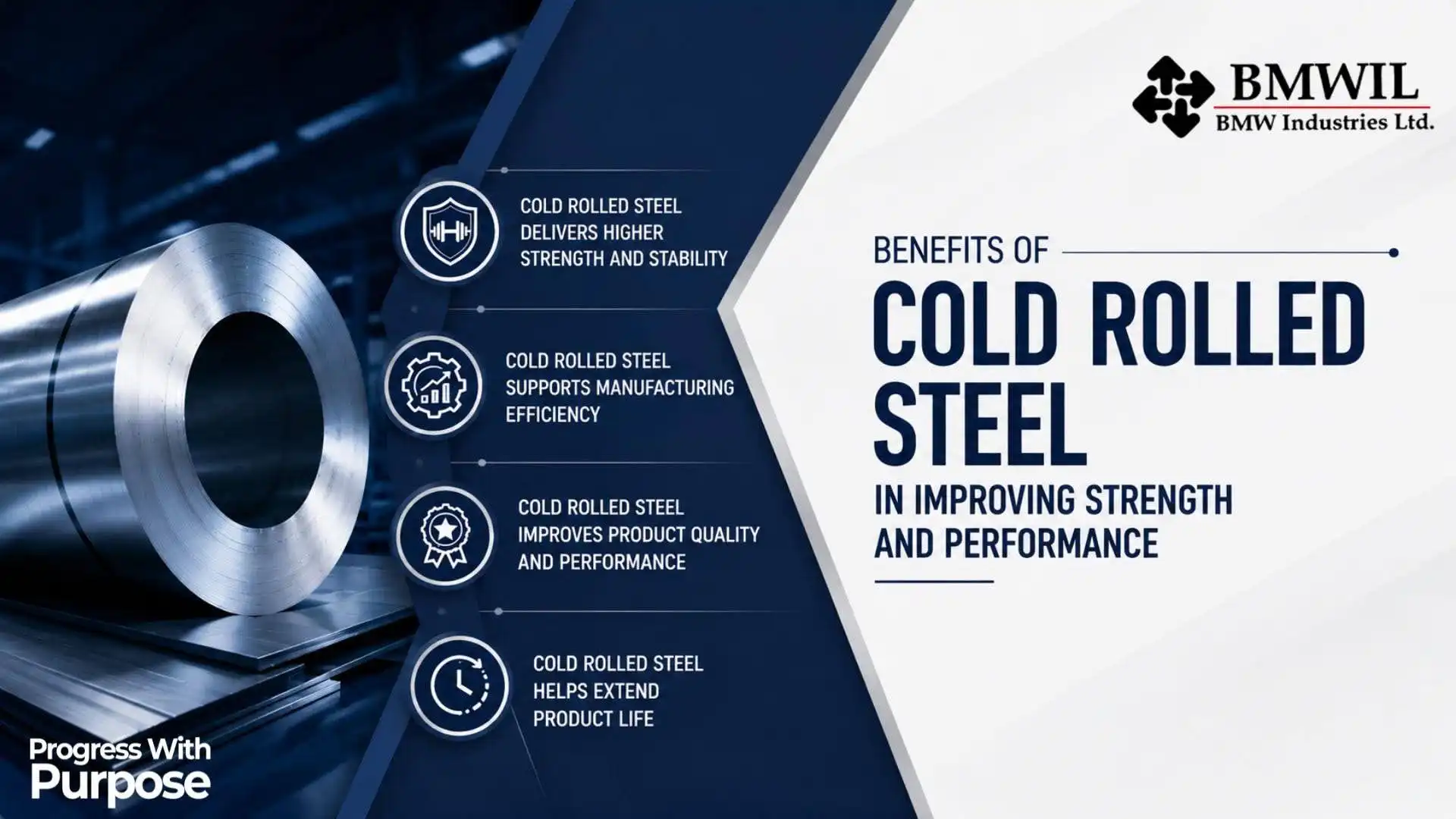
Hot and cold rolling are widely used to shape steel while improving its overall quality. Hot rolling takes place at high temperatures, making the steel easier to form into structural sections and larger products. Cold rolling is carried out at room temperature and produces a smoother finish, tighter dimensional tolerances, and improved strength. Together, these processes create steel products that are more accurate, easier to fabricate, and suitable for applications where precision matters.
Steel often operates in environments where moisture, chemicals, and changing weather conditions can affect its performance. Surface treatments provide an additional layer of protection against these challenges. Processes like galvanising, coating, pickling, polishing, and painting help improve corrosion resistance and enhance the appearance of steel products. These treatments not only extend the service life of steel but also reduce maintenance requirements over time.Properly treated steel delivers dependable performance while maintaining its finish for longer.
As manufacturing standards continue to evolve, precision steel processing has become increasingly important. Modern equipment allows manufacturers to cut, slit, level, and shape steel with exceptional accuracy. This level of precision ensures every component meets exact specifications, reducing errors during fabrication and assembly. Accurate processing also minimises material waste and improves production efficiency.
The benefits of steel processing go far beyond improving the appearance of steel. Proper processing enhances the material’s performance, making it more suitable for demanding industrial applications while ensuring long-term reliability.
Some of the key benefits include:
Producing high-quality steel requires much more than manufacturing the raw material. Every stage of steel processing adds value by improving the strength, precision, durability, and consistency of the final product. Steel processing stages precision steel processing all work together to ensure steel performs reliably across a wide range of applications.
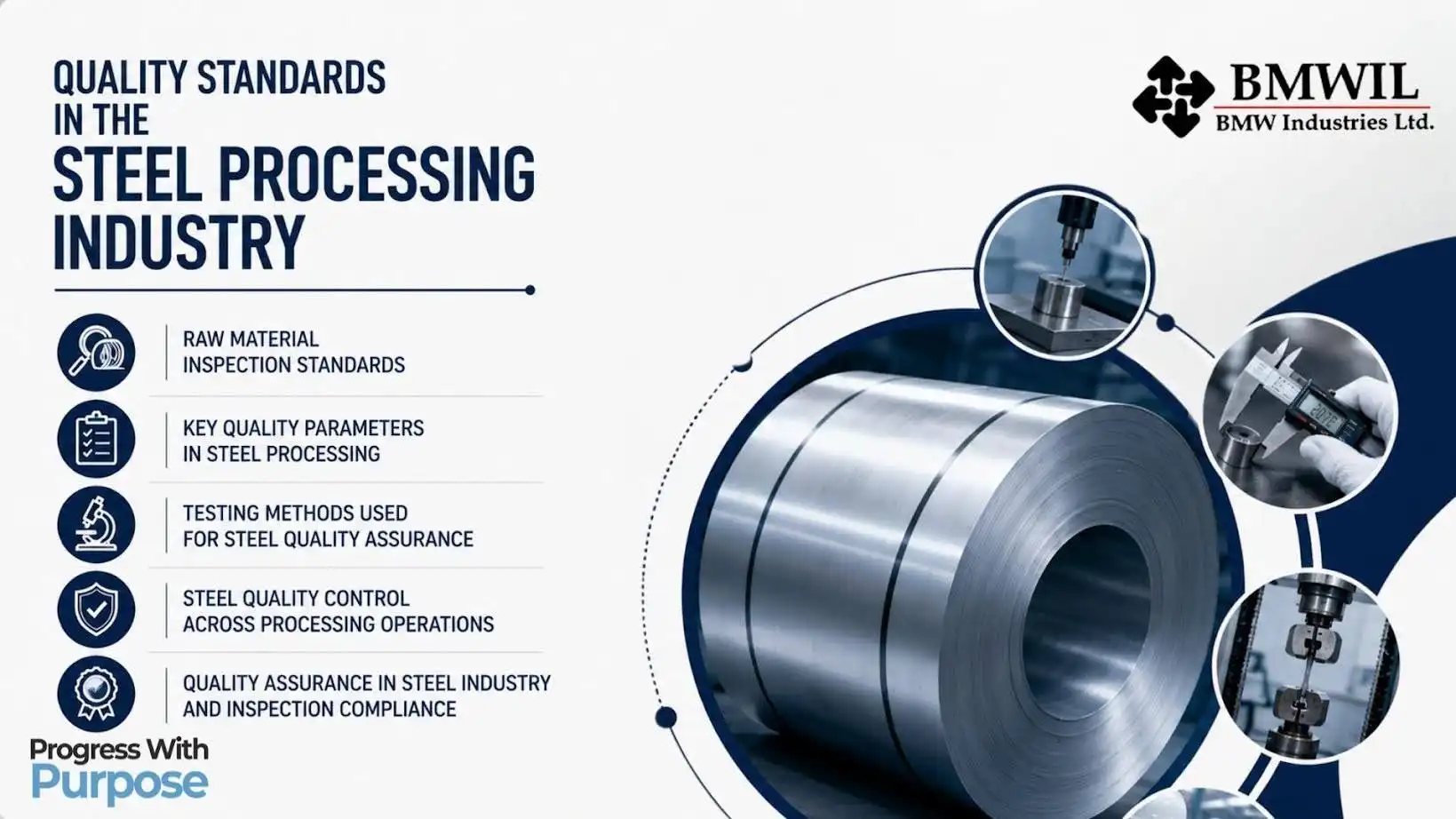
Supported by robust quality control in steel processing, these techniques help manufacturers consistently deliver products that meet modern industrial expectations. As industries continue to demand higher performance and greater precision in 2026, advanced steel processing will remain essential for producing steel that is built to last.
Steel processing improves the strength, durability, accuracy, and reliability of steel products, ensuring they perform consistently across different industrial applications.
The most widely used Steel processing methods include alloying, heat treatment, hot and cold rolling, surface treatments, cutting, slitting, levelling, and galvanising.
The role of quality control in steel processing is to monitor every stage of production, ensuring the finished steel meets required quality, safety, and performance standards.
Precision steel processing improves dimensional accuracy, reduces material waste, increases production efficiency, and helps manufacturers produce consistent, high-quality steel products.